Price by Market: PPP for Shopify Merchants
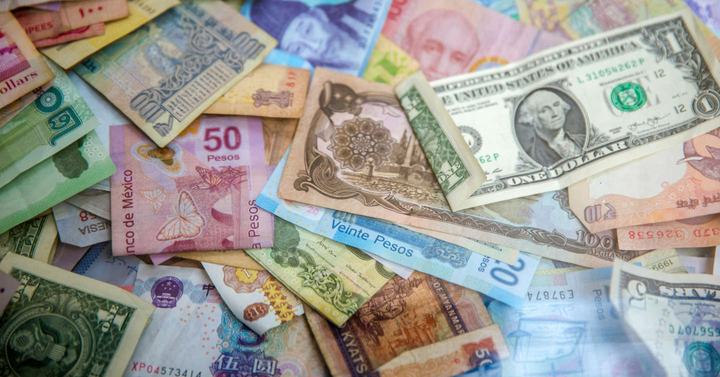
For a potential customer, a €49 online course feels very different depending on where they live. In Copenhagen, it’s an easy impulse buy; in Sofia, it could eat up a big chunk of their monthly budget.
That gap is what purchasing power parity pricing tries to close. It's a strategy used by everyone from Valve to Spotify, and it's increasingly within reach for Shopify merchants selling digital goods across borders. We'll explain what it is, when it works, and how it could go wrong.


Expand with confidence. Sufio invoices are compliant in over 50 countries and available in 40+ languages.
Start a free trialWhat is purchasing power parity?
Purchasing power parity (PPP) is an exchange rate that accounts for price differences between countries, ensuring the same amount of money buys the same basket of goods and services in both. The OECD explains PPPs as exchange rates that make the buying power of different currencies equal, eliminating price differences between countries.
The IMF uses a hamburger to explain it. They say that if a burger costs £2 in London and $4 in New York, the implied PPP exchange rate is one pound to two dollars, regardless of what the currency markets say that day.

The burger example isn’t a joke, by the way. The Economist's Big Mac index has been running since 1986 as a lighthearted guide to whether currencies sit at their “correct” level, based on exactly this logic. It marked its 40th anniversary in 2026, and the underlying idea traces back to Swedish economist Gustav Cassel in the years following the first world war.
The serious version of this work is the International Comparison Program, coordinated by the World Bank, with Eurostat and the OECD jointly responsible for the “Eurostat-OECD region.”
PPP pricing is not the same as currency conversion
Here’s where it gets tricky. Currency conversion answers, “What is €49 in Polish złoty today?” but PPP pricing answers what €49 actually feels like to a customer in Poland.
Shopify Markets already handles this for you. It converts and rounds your prices using market exchange rates, so Danish and Bulgarian shoppers see roughly the same real cost. PPP pricing intentionally breaks that symmetry and sets a lower nominal price where local incomes and price levels are lower.
The World Bank notes PPPs account for both currency differences and price level differences between countries. Wealthier countries have higher prices for local services, like haircuts or rent, because wages are higher there. Economists call this the Balassa-Samuelson effect. Market exchange rates don’t capture this.
The gap is huge, even inside Europe
European merchants often assume PPP only matters for Southeast Asia or Latin America. The single market proves otherwise.
According to Eurostat, price levels for consumer goods and services in 2025 ranged from 40% above the EU average in Denmark to 37% below in Bulgaria.
That’s a twofold difference between countries that share a customs union, a set of consumer protection rules, and, in many cases, a Shopify storefront.
So if you’re a German, Dutch, or Nordic merchant pricing for your home market, your default price tag is exceptionally expensive for a large share of the continent.
Why PPP works best for digital goods

Marginal cost determines whether this strategy makes sense for you.
Selling one more copy of an ebook, a Lightroom preset pack, a SaaS seat, a font license, or an online course costs you nothing. Selling a digital product at 50% of its usual price is still almost pure profit, so charging less in a lower-income market can only increase revenue.
Physical products don't behave that way. Your cost of goods, packaging, shipping, duties, and returns are all real and likely denominated in your home currency. Discounting a shipped product by 40% for a customer in Romania will put you in the red before the parcel even leaves the warehouse.
| Product type | PPP pricing fit | Why |
|---|---|---|
| Ebooks, courses, templates | Excellent | Near zero marginal cost, no logistics |
| Software, SaaS, plugins, licenses | Excellent | Scales infinitely, high gross margin |
| Digital art, presets, audio samples | Very good | Same as above, but watch for grey market redistribution |
| Memberships and subscriptions | Good | Works well, but VPN abuse is highest here |
| Physical goods with high margin | Limited | Only in select markets, after landed cost math |
| Physical goods with thin margin | Poor | Shipping and COGS eat the discount |
The upside: conversions, reach, and pricing that reflects reality
The main benefit is simple. Remove the price barrier, and more people buy. Let’s break down the key benefits of PPP pricing:
You monetize traffic you’ve already paid for. International visitors who leave at the price tag still cost you ad spend, content investment, and bandwidth. Meeting them at a local price turns that lost traffic into revenue.
You compete with the local market, not the global one. Your competitors in a lower-income country aren't benchmarking against western European businesses. If your product is priced for Denmark but also sold in Argentina, you're likely not even considered an option in the latter.
You reduce piracy and gray-market pressure. This is well documented in games and software. Valve built regional pricing directly into Steam, which supports prices in roughly 37 currencies and 4 region groups, with partners responsible for setting their own prices in each one.
You buy market share early. Streaming services took the same route. As Music Business Worldwide argued, Spotify’s reduced subscription prices in emerging markets make sound commercial sense: they attract far more users, and the long-term value of market dominance outweighs the short-term revenue trade-off.
It's simply fairer. To call back to Eurostat's statistic, charging a Bulgarian customer 2.2x the real cost that a Danish customer pays isn't a pricing strategy; it's an example of bad defaults.
The downside: VPNs, arbitrage, and the enforcement problem
Now, the uncomfortable part. When you set different prices for different countries, you create an incentive to fake a location.

VPN abuse is the obvious one
A good VPN costs about five euros a month. If your product costs €200 in Germany and €70 in Turkey, arbitrage pays for the VPN instantly, and there are numerous guides explaining how to do it online.
Big platforms fight this constantly (and imperfectly). Google's policy states that a YouTube Premium membership should be used predominantly in the country where you signed up and that traveling for more than 30 days or moving abroad may result in action such as cancellation. In 2024, The Verge reported that YouTube began canceling premium subscriptions of users who had signed up through a VPN to obtain cheaper regional pricing.
You’re not Google, though. Small businesses don't have the resources to out-engineer determined arbitrageurs, so plan for controlled “leakage” rather than perfection.
The other risks worth weighing
- Reseller arbitrage: buy cheap in one market and resell at a markup in another. Endemic in game keys and license-based software.
- Support and refund overhead increases. Mismatched billing addresses, cards from one country, IPs from another, and price disputes land in your inbox.
- Brand perception can suffer. Deep discounts can undercut premium positioning if visible to everyone.
- Complexity grows. Each additional price point adds maintenance across campaigns, invoices, accounting, and analytics.
- Detection false positives occur. Legitimate customers travel, use corporate VPNs, or live abroad. Overzealous enforcement can punish real customers.
The practical middle ground: use billing country and payment method country rather than IP address alone, apply PPP discounts to a limited set of markets, and cap the discount depth so arbitrage is never worth the hassle.
What European merchants need to know before they start
EU-based stores must be more careful than their US counterparts here.
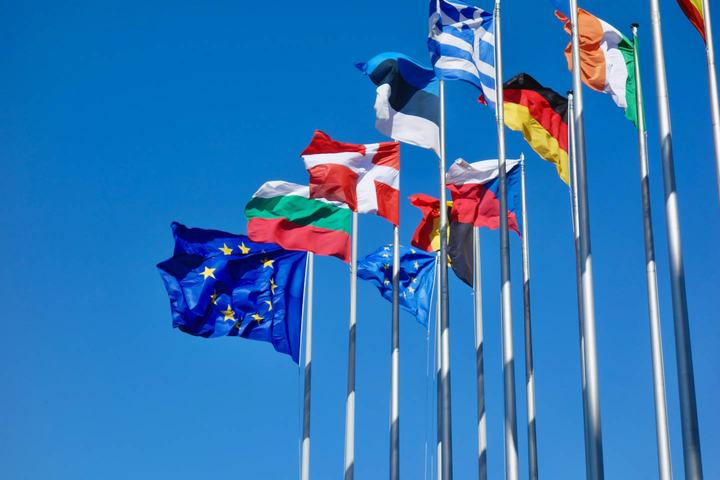
The Geo-blocking Regulation (EU) 2018/302 doesn’t require businesses to deliver across borders or harmonize prices, so differentiated pricing across the EU isn’t banned.
What is banned is blocking website access or rerouting customers without their consent. Even if a customer consents to redirection, the original site must remain accessible. In other words, you can’t silently redirect a Polish visitor to your Polish storefront while hiding the German one.
The regulation also identifies three situations where businesses cannot apply different access conditions based on nationality, residence, or location:
- Sale of goods delivered to areas they already serve (or available for collection)
- Sale of electronically supplied services
- Services provided in a specific physical location.
The regulation doesn’t apply to copyright-protected services like music streaming, ebooks, software, and video games, though EUR-Lex notes this exclusion will be reviewed during the regulation’s evaluation.
The practical reading for a European merchant selling digital products:
- Treat aggressive intra-EU PPP pricing as legally sensitive and get advice specific to what you sell.
- Never auto-redirect or block access based on a visitor's location.
- Save your deepest PPP tiers for markets outside the EEA, where the regulation doesn't apply.
- Remember that VAT on digital sales to consumers follows the customer’s country, so your net revenue varies by destination even at the same gross price. The European Commission’s One Stop Shop pages are a good starting point, but we also recommend checking out our guide to the new EU VAT rules and talking to a local accountant to be sure.
How to implement PPP pricing on Shopify
You don’t need to rebuild your store. A staged approach is better.

1. Set your reference price. Start with your home market price. All other prices are percentages of this.
2. Use a small number of tiers. Three or four tiers are enough. For example, 100%, 75%, 55%, and 40% of your base price covers most markets without requiring 190 price points.
3. Assign countries based on real economic data. Use reliable sources like the World Bank’s PPP conversion factors or Eurostat’s comparative price level indices to group countries into pricing tiers, then adjust the prices to psychologically appealing numbers in each country’s local currency.
4. Configure it in Shopify Markets. Group your countries into markets and manage catalog pricing per market. One caveat: Shopify's rounding rules are fixed defaults you can't customize, so for psychologically appealing price points you'll need per-market price adjustments or custom per-country prices. Shopify's own Markets documentation is the authoritative reference for what your plan supports.
5. Decide your anti-abuse rules in advance. Validate against billing country and card country, not IP alone. Write your policy down and publish it, so enforcement never looks arbitrary.
6. Measure the right thing. Not conversion rate alone, but revenue per visitor by market. A discount that lifts conversion 60% while cutting price 40% is roughly break-even and only worth it if lifetime value follows.
7. Review annually. Price levels and exchange rates move. Valve updated its recommended regional pricing in 2022 with a commitment to annual refreshes, and even they let it slip for three years. Put it in the calendar.
For a broader primer on the economics behind all of this, Shopify's own guide to purchasing power covers the underlying inflation and index concepts in more depth.
Compliant cross-border invoicing for Shopify
Selling in multiple currencies means invoicing in multiple currencies.
Once your catalog carries different prices in different markets, your paperwork has to keep up. Sufio automates Shopify invoicing for 7,800+ merchants selling cross-border:
- Invoices in your customer's language. Sufio supports over 40 languages, with translations checked by local accountants, so each document matches the language your customer used at checkout.
- Multi-currency billing. Invoices reflect the currency your customer actually paid in, and commercial invoices include HS codes and country-of-origin values for international shipping.
- VAT numbers captured and validated at checkout. Sufio can capture and validate VAT numbers from business customers, so tax exemptions are applied correctly and all required business details appear on the final document.
- Numbering that matches local rules. Invoices get unique, consecutive numbers in the exact order they are created, and the format can be customized with prefixes, dates, or order references to match local regulations.
- Country-specific e-invoicing. Built-in support for standards including ZUGFeRD in Germany, Factur-X and e-invoices via PA in France, and Peppol in Belgium.
- Automatic credit notes. Whenever a refund or return is processed in Shopify, Sufio generates the credit note and keeps it separate from the original invoice, preserving a clear transaction history.
A novel way to grow
Businesses shouldn’t see PPP pricing as charity or a discount campaign. It’s better to see it as an opportunity, as Netflix and Spotify do, because forcing a single global price can hinder growth in new markets.
For smaller Shopify stores, this only works with digital products, as each new sale has almost no cost. Physical goods would require you to rebalance your product in every market to make sure it remains profitable, which is achievable but extremely difficult.
Start with three or four tiers, select a few markets, track revenue per visitor for a quarter, and expand based on results.