Email providers use your domain’s DMARC policy to decide what to do with emails that fail authentication.
Sufio sends invoice emails and related documents on behalf of your Shopify store. If your domain uses a strict DMARC policy, you may need to authenticate your email domain so Sufio can send emails from your sender email address.
DMARC works with SPF and DKIM to help receiving email servers verify that messages sent from your domain are authentic.
When an email is sent from your domain, the recipient’s email server checks its SPF and DKIM records.
If the message passes the required authentication checks, it can be delivered.
If both checks fail, your DMARC policy tells the receiving server what to do with the email.
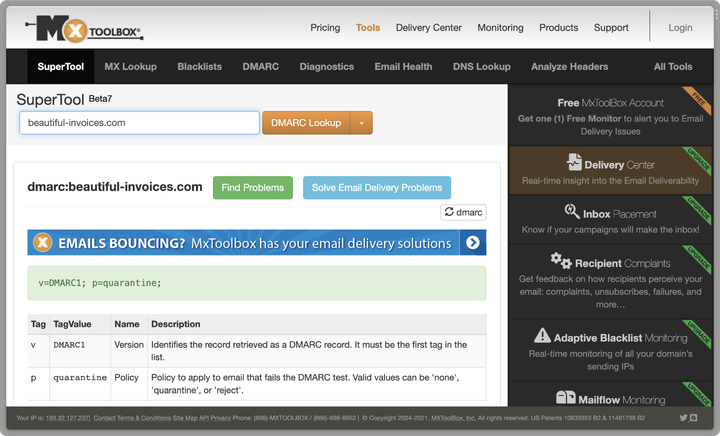
Your DMARC policy defines how receiving email servers should handle messages that fail authentication.
The following are the most common DMARC policy types:
none: Emails that fail authentication are still delivered. This policy is used for monitoring and does not block or redirect emails.quarantine: Emails that fail authentication are sent to the recipient’s spam folder.reject: Emails that fail authentication are not delivered.
To check your DMARC record configuration and policy, use a tool such as MXToolBox or a similar DNS lookup tool.
After you set up your SPF, DKIM, and DMARC records, you can test whether your email settings are configured correctly.
Use a tool such as Learn and Test DMARC, Mail-tester, or a similar email testing tool. These tools let you send a test email from your domain and check whether it passes SPF, DKIM, and DMARC authentication.
Testing your setup helps confirm that emails sent from your domain are properly authenticated before you start sending them to customers.
Tip
If your domain does not have a DMARC policy record yet, Sufio displays an example DMARC record you can use.